For entire generations, audiences have thought of a “haunted house” as a fairly singular idea: a creepy old house at the end of the street filled with musty old furniture and lots of dark spaces. Its paradigmatic representation has been cinematically cemented in classic and forgotten films alike, from THE HAUNTING OF HILL HOUSE to PSYCHO to THE AMITYVILLE HORROR to TEXAS CHAINSAW MASSACRE to the more recent IT. Haunted houses are generally defined as an old house, usually abandoned, vacant, or populated by recluses that the neighbors never see. The roots of this idea of what a haunted house “is” in our shared visual dictionary, I would say, comes from Edgar Allan Poe and Shirley Jackson by equal measure in literature—transporting the castles and laboratories of Bram Stoker and Mary Shelley into the collective American experience of the 19th and 20th centuries, the old homes in neighborhoods, oftentimes in America’s first suburban neighborhoods. This idea of a “Haunted House” has been updated a few times to more contemporary locales—in Stanley Kubrick’s THE SHINING and Tobe Hooper’s POLTERGEIST. But this general stereotypical version of a haunted house is defined by its representation as an icon of the past—as another. It is a symbol of something that most living generations were close to but did not necessarily experience. In a shorthand, the haunted house is “that old house at the end of the street.”
But what if that definition of the unexperienced past and otherness changes? What if the concept of “old” changes? And what if the definition and the concept of what is “the end of the street” changes? The implications of that change for both the audience at large and for me and my generation are both intriguing and scary—maybe scarier than a haunted house itself. That paradigm shift of just what “the house at the end of the street” is has been changing for a while—in social media over the last 10–15 years and also in the YouTube and video game online communities. But it reaches its culmination in Kane Parsons’ recent release and smash hit film: BACKROOMS.
A New Kind of Haunted House: From Liminal Spaces to THE BACKROOMS to BACKROOMS
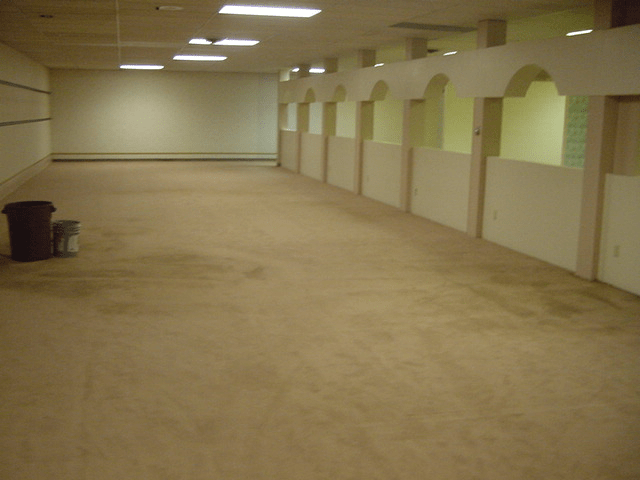
The general concept of this new kind of haunted house began with a phenomenon now generally known as “liminal spaces.” This concept traces its origin back to a photo first posted on an old website in 2003. (the same post inspired Kane Parsons’ THE BACKROOMS YouTube channel—but more on that in a minute). The original post highlighted an abandoned furniture store about to be renovated into a Hobby Store that would eventually be rehabbed into a Go Kart and RC raceway.
The photo remained in relative obscurity until May 13, 2019, when an anonymous user posted it to 4chan’s /x/ (paranormal) board, creating the original short text description that birthed “The Backrooms” lore and really supercharged the liminal spaces movement. The photo resonated with a ton of users as both an utterly terrifying place but also a place that was completely fascinating—something that they almost could not look away from, much like the original Haunted House, aka “the old house on the end of the street.” Soon a number of both “Backrooms” and “Liminal Spaces” accounts on Facebook, Reddit, Twitter, Instagram, and eventually TikTok and YouTube sprung into existence.
It is important to note that Kane Parsons had nothing really to do with this first generation of “backrooms” movement as it was a term that was used hand-in-hand with “liminal spaces” to define a certain aestheitc. Quick note, though the first title card for the first video in the YouTube THE BACKROOMS series actually announces it as BACKROOMS, the playlist and subsequent titles reference THE BACKROOMS – it all gets a little confusing. But it helps to use “THE” to differentiate his YouTube work from the 2026 feature film. And I will use a non-capitalized “backrooms” to denote the actual movement that preceded Kane Parsons’ THE BACKROOMS channel and BACKROOMS film. Hope that is clear enough.
Anyway “liminal spaces” and “backrooms” both catalogued a shared aesthetic that focused on amassasing images of abandoned or minimally unoccupied spaces usually vaguely recognizable as retail, office, mall, and generally leased business properties. They were often times also featured with unexpected and unnecessary architecture, creating a mix of utilitarian components and odd touches and flourishes—architectural fixtures, dated wallpapers, carpeting, coloring (all of which were very apparent in the suburban design and architecture of the 1960s and 1970s).
The “liminal spaces” and “backrooms” movment had accounts on X, Instagram, TikTok, and other social media platforms that share similar odd, abandoned, empty spaces. Most of these spaces, at least in the early stages of the liminal spaces movement, were real. If Andrew Wyeth’s art inspired some version of the “house at the end of the street,” think of this as the Wyeth phase of the liminal spaces movement.
But as technology advanced and became more accessible, more creators were inspired to both enhance real photos and manufacture new ones within the liminal spaces movement. Kane Parsons’ YouTube channel THE BACKROOMS is part of this evolution, this second-generation of the movement. At this stage, creators were intentionally generating liminal and backrooms spaces where, often times, something feels intentionally “off.” No longer were these just Andrew Wyeth paintings that felt both frightening and unmissable—but often times, there was a monster (literal and figurative) inside of that house.
Look, you can find better analysis on the history of Kane Parsons’ THE BACKROOMS universe in a ton of places on the internet. You can also just watch his entire THE BACKROOMS series yourself. It only takes about 2 hours and 30 minutes. Anyway, the long story short is that THE BACKROOMS took the idea of creating a “backrooms” space or a “liminal space” and married it to a consistent and cohesive lore and narrative—creating a new universe, the universe of THE BACKROOMS: a series of inter- or extra-dimensional spaces, portrayed as interconnected liminal spaces, that have been discovered both accidentally (by unwilling participants that no-clip or literally “fall” through dimensional tears in the walls and floors of our universe into the dimension of THE BACKROOMS) and on purpose. Parsons reveals that ASYNC—an MRI manufacturer was able to open portals into this space and ultimately wants to monetize it (in a twist worthy of David Cronenberg) into a commercial and storage space for our world.
The problem: there is an entity, sometimes only heard and not seen, in these spaces. Sometimes it is in the form of a monster, sometimes it is in the form of just the design, that makes both those inside THE BACKROOMS and the millions watching on YouTube realize that this space is not safe. By successfully marrying that liminal space aesthetic to an effectively frightening and insightful narrative that feeds into very real modern fears (not having a place to live, not having enough space), Parsons created the modern haunted house with this channel.
BACKROOMS (2026) – An evolution or an expansion of the new “haunted house”?
In 2024, Kane Parsons was collectively approached by A24, along with producers Jason Blum (producer of the HALLOWEEN remakes, MEGAN, and THE PURGE) and James Wan (creator of the SAW franchise—which feels like a natural connection) about converting his YouTube universe into a feature film for theaters. Parsons agreed. But instead of taking his feature film as some maximal statement or summation of the lore of his channel, he went in another direction.
In fact, you might be better served and enjoy the film more if you know less about the lore from THE BACKROOMS YouTube series. Because Parsons’ BACKROOMS movie takes this idea and builds it out—not in terms of lore, but in terms of character. I think, however, how successful you find the film is dependent on how much the characters work (or do not work) for you. It is kind of a radical idea because you need to know nothing about the lore in the previous paragraph to enjoy the film.
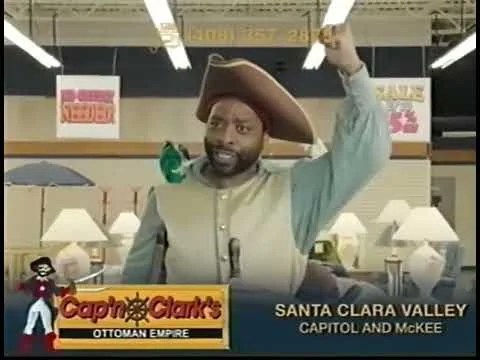
The film BACKROOMS centers around Doctor Mary Kane and Clark, the owner of an unsuccessful clearance furniture store that is representative of his failing life (he sleeps in the store most nights). Clark, played by Chiwetel Ejiofor, has separated from his wife and begun to see therapist/psychiatrist Doctor Mary Kane, played by Renate Reinsve. In a voiceover, Mary outlines something she sees as a fundamental issue with human behavior:
“We all have our loops, our habits, behaviors that keep us walking in circles and reaching for the same solutions over and over again. Thinking that each time they will take us somewhere new, but they don’t. Still it’s the neural pathway of least resistance. The path you made is the one that kept you safe as a child. You learn to push people away before they could hurt you. And now as an adult, you’re still stuck right where you started.”
This voiceover fades into a therapy session that Kane is conducting with Clark. The idea of behavioral loops is not new. It was heavily explored in HBO’s WESTWORLD, of which BACKROOMS screenwriter Will Soodik and producer Robert Patino were both a part.
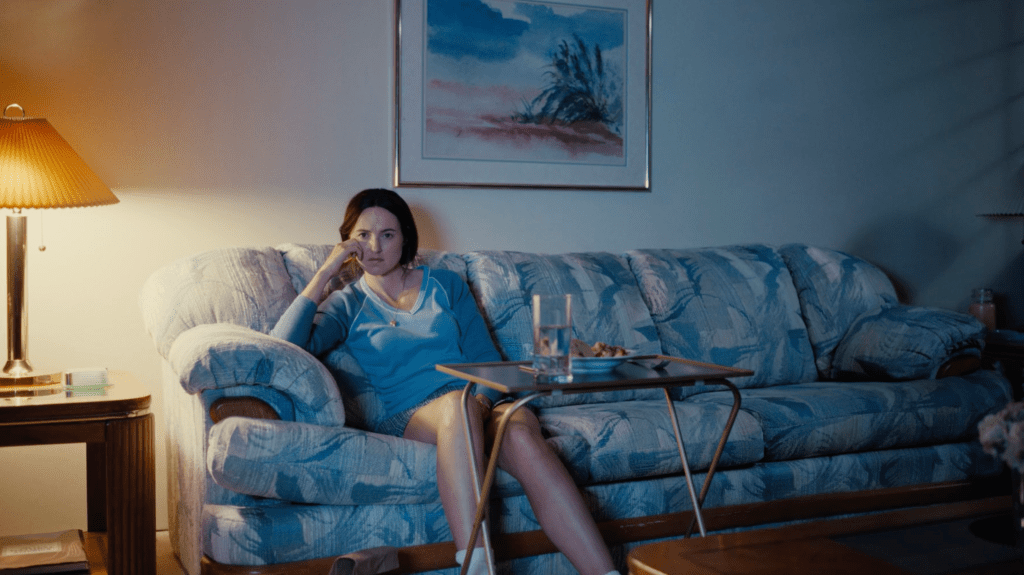
But with Parsons, the idea of loops and pathways of least resistance becomes of paramount importance to what’s going on in the Backrooms and why this “anomaly” exists. It is eventually revealed that, somehow, Clark’s existence is both conscious and subconscious—his behavior patterns, inclinations, and thoughts are somehow being manifested or merged into the extradimensional space that some entity is growing and enhancing. Meanwhile the ASYNC corporation is documenting and exploring the space.
Clark seems constantly on the verge of an angry outburst. His marriage has failed and he has divorced from his wife (presumably a spouse that he sent to law school and is now a successful lawyer). His furniture store is on the brink of bankruptcy and he begrudginly plays “Captain Clark” – a pirate character – on TV commercials to sell his wares to unsuspecting early afternoon and late night local TV stations. The deal that Clark has made for his life is something that generates constant frustration, hence seeing Mary.
Clark eventually finds that the power that has been flickering and failing in his furniture store is somehow comingled with an extradimensional space – Kane Parsons’ THE BACKROOMS – and is able to find it from a seam in the wall (a far more audience friendly means of transportation than the usual no-clip that is used in YouTube versions to enter THE BACKROOMS). There he finds room upon room of space that looks like it seemingly an office building in 1990, but just slightly office, the design is erratic, there is a stop sign, furniture melting into the floor, tiny doors, and windows for no reason offering no berth to the outside. Clark eventually encourages his employees to go with him so that he can prove to Mary that the Backrooms exist, but unpredictably stays in the Backrooms. Clark explains the space to his weary employees as something that looks like it was made by “construction workers on acid.”
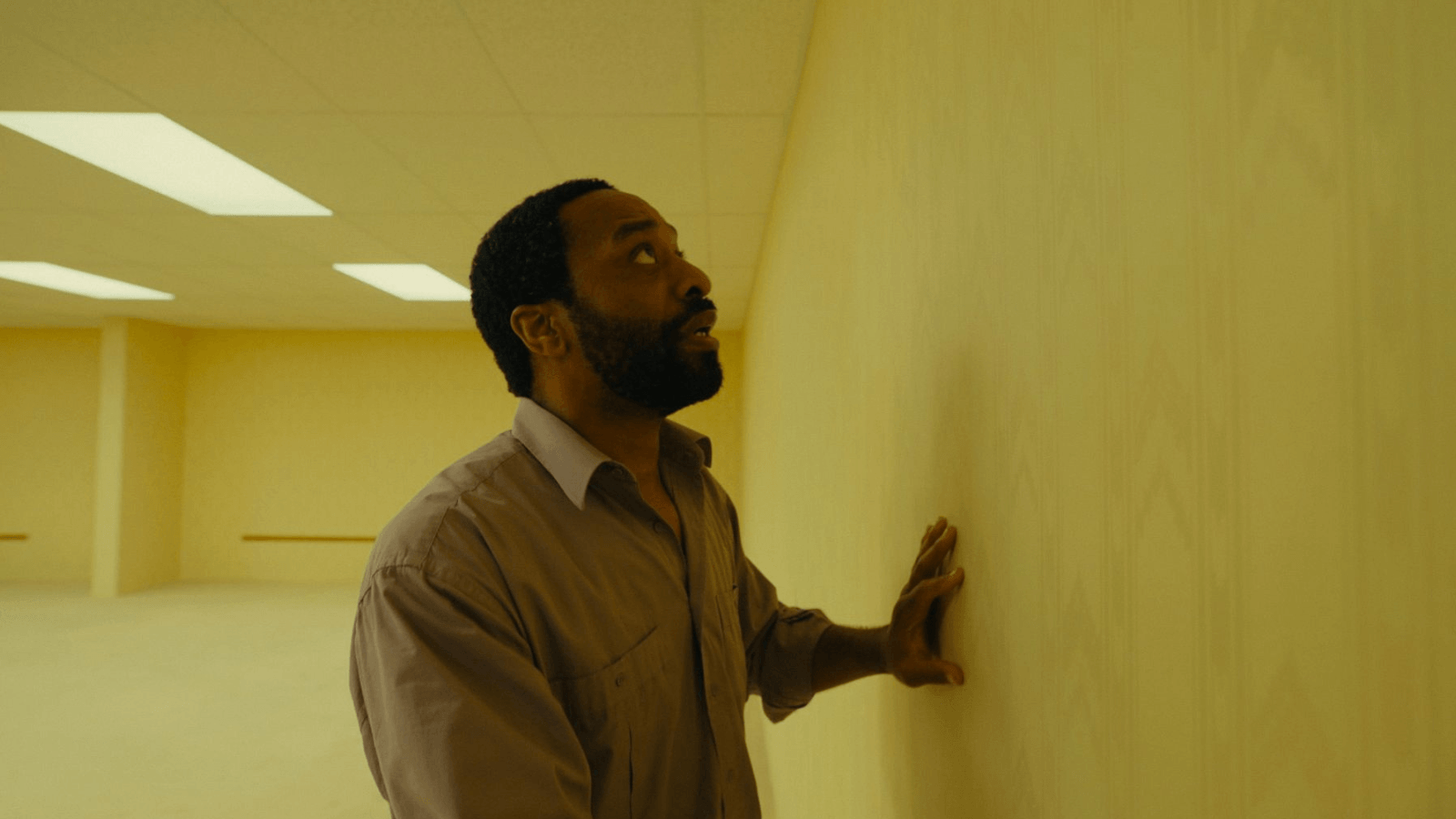
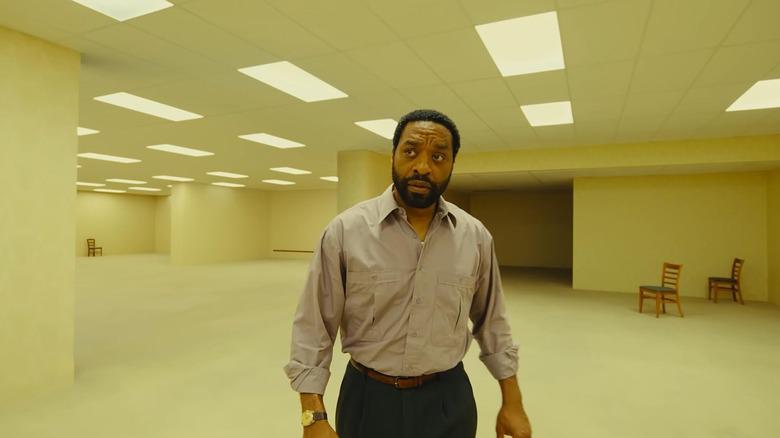
Dr. Mary Kane appears at least just as dissatisfied and depressed as Clark at times but is able to hide it a bit better, putting on a face for her patients and the outside world that buys her tapes sold on late night television (another David Cronenberg touch) that belays the fact that her mother was an institutionalized agoraphobic that forced her to stay trapped inside a decaying house filled with hoarded items. And ultimately the audience discovers that Mary’s subconscious and memories have just as much of a connection with the space in BACKROOMS as Clark’s more overtly resentful presentation. Clark’s disappearance causes Mary to eventually make her own venture through the slit to find Clark. But what she finds is a monster.
The one piece of lore from THE BACKROOMS that Parsons expands upon in BACKROOMS is the monsters. Clark eventually theorisez that all of our existences might be being mirrored in The Backrooms – but far from exactly. Is it an imperfection or an improvement? Clark argues to Doctor Mary that it is the latter. But that depends on the perspective.
Because we find out what the monsters roaming the halls of The Backrooms are versions of ourselves taken from our subconscious, but not an exact representation – either physically or mentally. They are off, unknown, uncanny – and far from the way we see ourselves in the mirror. Clark’s Captain Clark character in the commercials become a monster, 9 feet tall and disfigured, in The Backrooms that eventually eats Clark alive – and begins to chase Mary through the space.
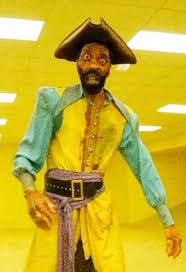
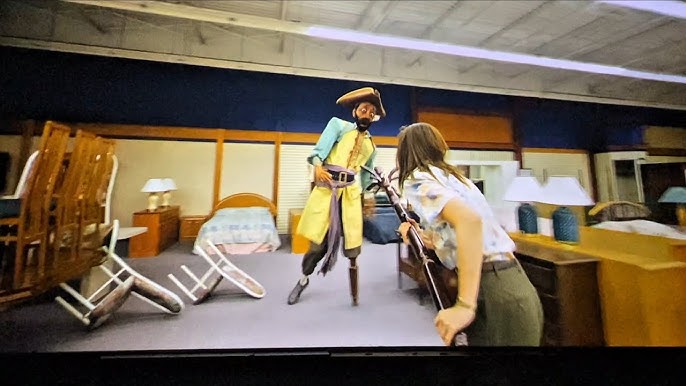
In creating these “monsters,” Parsons—in my opinion—combines the setting of THE BACKROOMS series with the antagonist of his other series, THE OLDEST VIEW, about a large puppet in a dead mall that attacks vloggers. And it’s a really successful visual representation of the fractured relationship between the conscious and the unconscious and between the eternal present with the infinite past.
In a way, a house is not a “Haunted House” without a monster. Like behavior loops, the “evil” or “other” version of us that exists in another dimension is not an original idea. But the filmmakers’ merging of these two ideas with the dread of liminal spaces makes it really interesting and fresh and new—both ideologically and in the monster’s physical manifestations. And it is what makes it this new and fresh take on the concept of a “haunted house.”
Why I Really Find Backrooms, Liminal Spaces, and the new “Haunted House” Truly Frightening
It is the unknown of these spaces that makes them uncanny: dead malls, old movie theaters, closed retail stores, abandoned and vacant office spaces. Uncanny here means strange, mysterious, unsettling or moreover when something just seems off but you can’t quite put your finger on it. The younger generation, the Gen Zers and Gen Alphas, find these places frightening for a variety of reasons. After all, THE BACKROOMS are not that far off from an office in the 90s. But it is unknown to them, a place that never existed in their timeline that helps to amplify the uncanny. An abandoned and empty 90s office building to Gen Zers is what the old house at the end of the street used to be for Boomers and Gen Xers. The younger generations in the last half of the 20th Century were more terrified than comforted by these traditional “haunted house” representations. And now the younger generations of the 21st Century are more terrified by dead malls and office spaces from the 1960s through the 1990s. I think it’s that generational mix that is needed to sustain a true haunted house—and there is just not enough gas in the tank for a traditional 20th Century haunted house at this point. But there is for the liminal space.
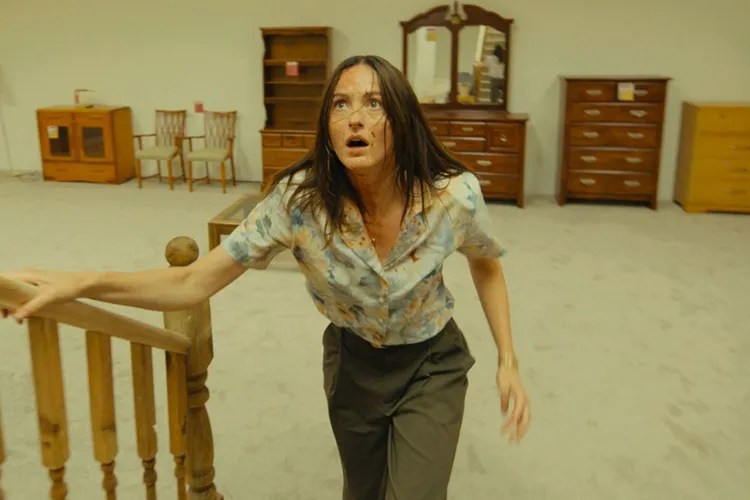
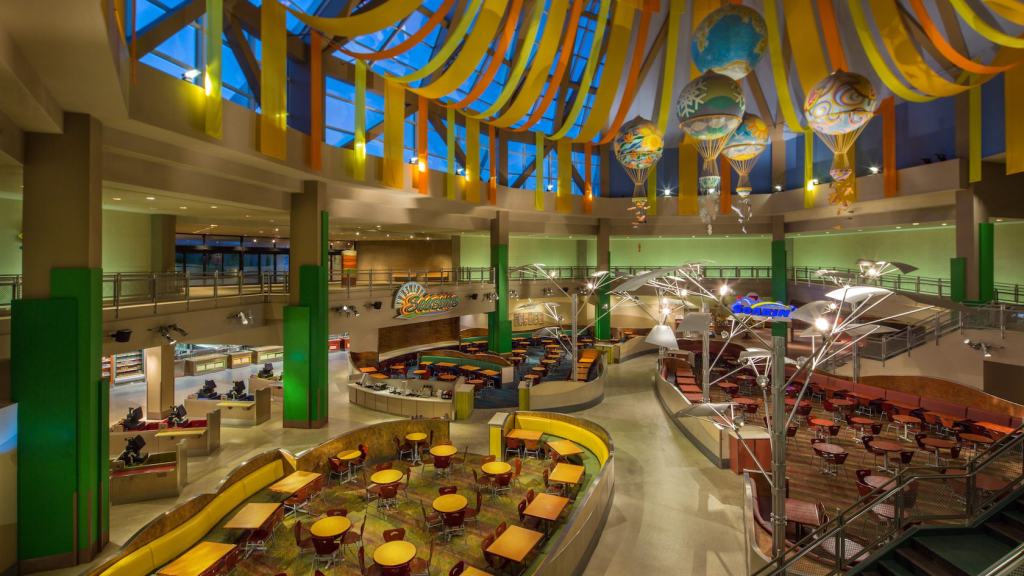
It is no accident that Parsons set the film and YouTube universe of The Backrooms in the early 1990s instead of the present day. While Boomers are almost completely at a loss for why liminal spaces are scary, I know a lot of Gen X hates liminal spaces and is creeped out by these photos as much as Gen Z and Gen Alphas. My problem is that I find liminal spaces actually kind of pleasing: empty malls, old multiplex movie theaters, old museums, and even the Land Pavilion at EPCOT. I find them pleasing because these spaces harken back to my own youth in the 1980s. But it’s basically gone. And I’m sure there were people like me in the 19th and 20th centuries that found the House of Usher or Norman Bates’ home, in a way, slightly comforting because it reminded them of their youth and how they grew up – but were also places from their memory that were now gone.
The characters of BACKROOMS, Clark and Mary taught me a valuable lesson. We can’t live in the past. While we can sometimes use it as a weapon or a tool situationally (for Mary literally – when she uses the cement handprint that she took from her now non-existent home to kill the Captain Clark monster), we can’t create it – or recreate it.
I think I maybe learned a lesson in BACKROOMS that I could cross-apply to my own feelings on liminal spaces. We build our own tragedies every day trying to reconstruct the past—reaching for nostalgia. And in a way, our memory of the past is (to borrow a track title from the BACKROOMS soundtrack) an “old house—not yet built.” Our view of the past, of nostalgia, is so often a lie. It is our own creation, our own monster, our own horror—we just don’t always realize it.
Though I know they can feel it, in the way we all feel things in the collective consciousness that makes us want to watch horror movies, I’m not sure that is something as distinctly apparent to the Gen Z audience of BACKROOMS, as it is to this Gen Xer. We can’t live in the past, we can’t live in the BACKROOMS, even though they’re always there if we want to visit.


One thought on “BACKROOMS: It’s Time For A New Kind of Haunted House – On Kane Parsons, Liminal Space and the Horror of the Uncanny”