
Now that all three installments in David Gordon Green’s HALLOWEEN trilogy have been released and the proverbial dust around Michael Myers’ gray-water tainted mask has settled, we can finally sit back and take a look at the sprawling saga that David Gordon Green (DGG), Danny McBride and Blumhouse have spun for audiences over the last four years. And what a four years it has been. Much like Haddonfield has become to its residents, the times are so different now than they were in Halloween of 2018 that they are almost unrecognizable. Accordingly, intentionally or unintentionally DGG has made a Haddonfield and a Michael Myers that are fit for this transformation of our own world and its boogeymen. But like any great filmmaker, DGG wisely avoids mentioning any event or person by name (no signs of Trump OR Biden, January 6th or Kenosha, Ukraine or even a pandemic). And yet it is all there, in fact, however obfuscated throughout the trilogy with alternate doses of 1978 nostalgia, a supercharged slasher aesthetic, and ultimately a haunting surrealist requiem. The result is a Michael Myers and a Haddonfield that are both timely and timeless. And in many ways, Haddonfield is just as much of a character, an evil, and an antagonist as Michael.
So why did this “Haddonfield Trilogy” hit me so hard? How did DGG do this to me? Sometimes I don’t even know. So I’m going to try and deconstruct this series from textual, subtextual and metatextual angles. There is a lot going on in this film series and it doesn’t always break down quite so cleanly but I will do my best.
Before DGG came to the HALLOWEEN franchise it had arguably been run into irrelevance as a cinematic title – the same way its compatriots in slash, FRIDAY THE 13TH and NIGHTMARE ON ELM STREET had also done. But there were still HALLOWEEN houses at Universal Studios’ HHN every other year, Michael Myers masks and merch still sold decent amounts every fall season. But taking the character anywhere new or relevant in the form of a movie was out of the question. But Hollywood knew there was still kindle in that HALLOWEEN flame even if it was currently extinguished. But what direction to take it? We had seen multiple sequels in the original “Curse of Thorn” storyline that burned Michael Myers into some kind of crazy powered curse, we had seen a found footage installment, we had seen a Kevin Williamson SCREAM-esque revival in H20, we had seen the aughts give birth to a more grounded approach (like so many films in the aughts – thanks Chris Nolan) courtesy of Rob Zombie’s (IMO underrated) duology. But Zombie’s entries (especially HALLOWEEN 2) were largely derided critically and at the box office. The franchise had not been relevant in the cinematic zeitgeist since H20 and certainly any fresh path had long since disappeared.
Enter the age of “the requel”. If you don’t know what a “requel” is – and I am hoping if you are reading this blog you might… but if not, a requel is a (somewhat cynical coined) term meaning a reboot and a sequel combined, taking legacy characters (though not always actors – see FURY ROAD) from the original film or film series and placing them in a new series of films as a supporting actor – with new characters and situations – and often times using them as a way to hand-off the series to this new generation. The first requels happened decades ago with films like THE COLOR OF MONEY (a requel to THE HUSTLER) and TEXASVILLE (a requel to THE LAST PICTURE SHOW). But they began to proliferate in the last decade. We have seen requels in STAR WARS: THE FORCE AWAKENS, CREED, BLADE RUNNER 2049, TOP GUN: MAVERICK and the previously named MAD MAX: FURY ROAD. With all of these being developed before or simultaneously with HALLOWEEN, and most of them being box office and zeitgeist hits, the Michael Myers franchise seemed like a great candidate for the requel treatment.
Universal and Blumhouse (who finally acquired the rights back in the mid teens) had recently acquired the film through a brokered deal with Miramax. Miramax and the films producers, the Akaad family could not seem to get a filmmaker to commit to make HALLOWEEN 11. Dunston and Melton (SO ABOVE, SO BELOW), Mike Flanagan (OUIJA 2 and a ton of Netflix TV shows), and even Adam Wingard (THE GUEST and YOU’RE NEXT) all passed before Miramax and the Akaads finally sought out Blumhouse to produce with Universal distributing.
Now Blumhouse just needed to find the right filmmaker who had a pitch that could crack the code of an INTERESTING Michael Myers story: enter David Gordon Green and Danny McBride. Their pitch, they wouldn’t be making HALLOWEEN 11, they would be making HALLOWEEN 2. That is they would be making a requel, a direct sequel to HALLOWEEN 1978, ignoring all ensuing continuity and starring Jamie Lee Curtis as Laurie Strode, now 40 years older. Even John Carpenter hooked into the project as an advisor and music composer after being courted by Blum and DGG. This would be the first film since HALLOWEEN III that John Carpenter and Debra Hill would be involved with. All of the stars now seemed in alignment: the requel treatment with Carpenter, Jamie Lee Curtis, Debra HIll, Blumhouse, and of course DGG and McBride.

Now before HALLOWEEN, DGG was one of my favorite filmmakers, right up there with Harmony Korine, David Cronenberg, and David Fincher. But it kind of surprised me that he was going direct a HALLOWEEN requel. Although requels are now stale fodder, back then they were super hot ideas. But even then, to me at least, requels mostly seemed like a super cheap cash grab. And I never thought DGG would be into making a super cheap cash grab. So I asked friends in the industry many times, “what will the creators of GEORGE WASHINGTON, EASTBOUND AND DOWN, PINEAPPLE EXPRESS, YOUR HIGHNESS, and MANGLEHORN bring to the Michael Myers story?” And when the first trailer hit, I was even more confused. In fact, when I finally watched HALLOWEEN (2018), I was STILL confused. And that continued until I was able to see its follow-ups KILLS and ENDS. But now looking back on HALLOWEEN 2018 in light of those sequels, one can definitely already see DGG and McBride beginning to craft their masterwork.
HALLOWEEN (2018) – Taking out the chessboard and setting up the pieces.
Upon my first viewing of this film, like most requels, I thought it was a solid but slightly unremarkable film. Now, the general public went absolutely bonkers for this. It was a runaway hit and like so many requels, universally beloved – but ultimately I was kind of meh on it. It really did not have much from David Gordon Green, but looking back on it after watching ENDS and KILLS, it has a lot more DGG than I originally thought. And I do think it is necessary to have this out of the gate home run in the eyes of the public (even though more discerning fans unfavorably described it as Laurie and Michael go HOME ALONE) so that then DGG can make KILLS and ENDS. He had a green light for miles from Universal, Blumhouse, and John Carpenter. Michael was back!
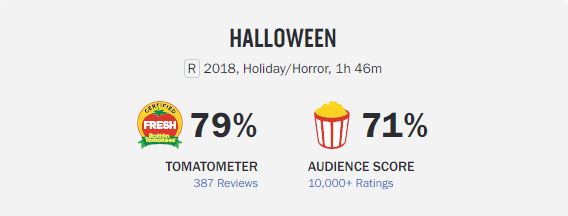
Textually: Now on the surface, HALLOWEEN 2018 is a straightforward horror slasher film. And Michael does have a couple of great kills in the film – though they are tempered both in quantity and in gore so as not not turn the general public off (qualities that DGG would later throw out the window in HALLOWEEN KILLS). Like all requels the film felt calculated. In this case it was calibrated for just enough horror for the casual to handle. And for a horror fan like me it felt fun at times but ultimately a little bland in both gore and plot.
Now DGG also does a ton of set-up in this film. Most importantly, he gives us a very lived-in Haddonfield, something that would be crucial to the success of KILLS and ENDS. When you go back and rewatch HALLOWEEN 2018, you will see characters like Sonia, the graveyard attendant, the nurse and doctor couple, and even Sheriff Barker and Will Patton’s very important Deputy Frank Hawkins. You miss a lot of this the first time around because you have no idea that these very tiny came roles will become part of the greater story in KILLS and ENDS. But placing these characters in Haddonfield from the first frame of this trilogy was important. It suggests that DGG and McBride were always meticulously planning 2018 to morph into something different in KILLS and ENDS.

Subtextually: The biggest thing he sets up subtextually in this film is the three generations of Strodes. Their story would be what this trilogy pivots on both textually and subtextually. And although not readily apparent in this film, this also sets up the generational conflict that plays out over KILLS and ENDS between Boomers, Gen X and Gen Z. DGG also very subtly weaves in a story about Karen Strode – like so many Xers this child has become nothing more than a brainwashed automaton of her mother’s creation. Even when she is rebelling or hating on her mother Laurie, it is because of what Laurie did to her. Karen resents and arguably hates her mother Laurie for making her this person – yet ultimately this “person” is who she turns to when she needs to survive Michael Myers. This hell would be her salvation. Such a contradiction is the cursed existence of Generation X – but I digress (more on this in the HALLOWEEN KILLS section)..
Metatextually: I want to also specifically note that DGG does a great job with Micahel Myers’ aesthetic. Even if you don’t like or are lukewarm to any of the entries in this trilogy, you have to admit that it was nice to see Michael in a great mask after years of wearing absolute mask fails. DGG’s Shatner mask for Michael looked enough like the original but also was its own thing, aged and worn – in a creepy yet realistic way – which is a really hard balance to strike.

And DGG’s decision to bring back Nick Castle to play “The Shape” aka Michael for the first time since 1978’s original was a gamble but ultimately a huge W for DGG. Castle plays Michael better than anyone has and his body work throughout the trilogy is incredible. I would put it right up there with David Prowse as Darth Vader in the original STAR WARS trilogy. And you could feel his presence inhabiting Michael in ways that you had not felt since those original films. Combining that performance with James Jude Courtney as the unmasked Michael was awesome. Courtney was never really shown in close-up but the glances and brief shots of his face were enough to make us all believe that was Michael without a mask.
HALLOWEEN KILLS – A slasher classic with Michael Myers at the height of his powers delivering a eulogy for Generation X.
Going into HALLOWEEN KILLS, I wasn’t sure what to expect. The trailer seemed like more of the same and I did not have high hopes. Still it was a HALLOWEEN film and it was a David Gordon Green film. So I was going to watch it no matter what. By the time the credits rolled I was convinced that HALLOWEEN KILLS was a stone cold masterpiece. Don’t get me wrong, it is an absolute tightrope walk of a film. And there were times during my first watch where I thought the film was in trouble. And you aren’t sure what David Gordon Green is going for until, literally, the final shot of the film. But boy did he stick the landing.

Textually: It was everything that I wanted from a DGG Halloween movie. It was a brutal, unrelenting slasher featuring a “supercharged” (DGG’s words) Michael Myers at the height of his anger and power – elevated by a perfectly awkward sense of tone and humor. In a weird way, David Gordon Green is giving us the Platinum Dunes Michael Myers (the ugly, vicious, sleek slasher version seen in the Platinum Dunes horror remakes of the aughties, movies like Marcus Nispel’s TEXAS CHAINSAW MASSACRE and FRIDAY THE 13TH as well as Sam Bayer’s NIGHTMARE ON ELM STREET). The Platinum Dunes remakes are all stuff that looked great – but had no soul. DGG makes that great looking slasher here but stuffs it with so much subtext, that the “great looking slasher” actually becomes a part of the greater thematic commentary. Moreover, DGG is couching this stylized killer within a city and a generation that has been living on the edge of fear for 40 years – waiting for this day to come, alternately dreading it and hoping for it. And that is where the Platinum Dunes Michael comes into play. Michael has arrived and these citizens are foaming at the mouth for a kill of their own. And at times you, the audience member, might even find yourself rooting for Michael. And yet as soon as you do, because of the subtext of the film, you immediately feel uncomfortable for doing so. It is a complicated emotional reaction indeed. Michael may be a killer similar to those seen in those Platinum Dunes remakes – but the movie around him hardly is.

And the subtext really starts right from the get-go at the beginning of the film in its prologue which, ironically, is created largely for textual reasons – to explain one of the big questions of HALLOWEEN 2018: how did Michael get into the asylum (that he ultimately escaped from) – who put him there and why wasn’t he killed after the events of HALLOWEEN 1978? Well it was thanks largely to the actions and decisions of Deputy Frank Hawkins on that fateful Halloween night.
Subtextually: This film has so much going on subtextually it almost has too much. This Frank Hawkins prologue is so great because it really sets the mood for the film and a greater thesis of memory vs. fantasy that runs throughout HALLOWEEN KILLS. It also creates the general off-kilter tone that DGG wants to infuse audience members with throughout. Part of me thinks that DGG wanted to direct this entire trilogy just to do the backstory on Deputy Frank Hawkins that we witness in this 12 minute prologue of HALLOWEEN KILLS. Yes it is complicated, yes DGG shoots it with harsh lighting, different depth of field, and runs it all through a grain filter to try and emulate the true cinematic style of John Carpenter, and yes it feels like something that was actually in HALLOWEEN 1978 or HALLOWEEN II. But none of that is true. This is a new prologue – something entirely fabricated by DGG and Danny McBride. It is almost like DGG and McBride are saying “yeah we know we are a requel, and now we are going to go over the line – we are going to do what other requels want to do but don’t have the balls to do. We are going to rewrite your own memories.”
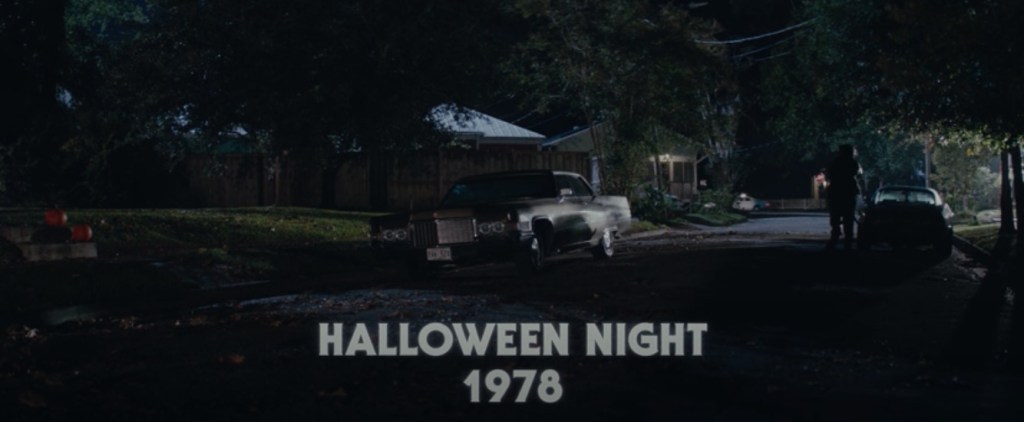
We see that Deputy Frank (an entirely original DGG and McBride character completely inserted into the history of HALLOWEEN 1978) was responsible for Michael surviving that night and being taken to the asylum, he also killed his own partner when he was trying to shoot Michael. We see a recast Loomis lookalike, a Michael with the perfect mask and coveralls. And did I mention he they completely mimicked the police uniforms of 1978 – right down to the flare on the pants and the fur collars on the jackets? DGG even went so far as to have his production designer fabricate a tree that matched the one in front of the Myers home back in 1978. It is important that DGG goes to such lengths to create this prologue because later on DGG then mixes in footage from moments that DID happen in both HALLOWEEN 1978 and HALLOWEEN II. So he is really purposefully muddy the waters of the viewer’s own memory here to really show that which truly happened vs. that which we remember or think or even fantasize about. The whole thing again creates an off-kilter base for a slasher – a combination already more interesting than anything in HALLOWEEN 2018.
The prologue also sets the table for a generational wound that mushrooms into a generational war. The experience of the boomers put upon the younger survivors of Generation X, too young to really understand what was going on in 1978 and now too old to really be of relevance in this new story.
And I want to take a minute to really get into the meat of this generational conflict story that is at the heart of HALLOWEEN KILLS. Ultimately it is Karen Strode who will die for the sins of her mother (the boomer) and daughter (the Gen Z-er). Karen Strode is the classic X-er, selfless and selfish. She does the right thing and manages to somehow piss everyone off when doing it. She doesn’t have the courage to tell her mother that Michael has returned, instead yelling at an orderly for leaving her mother’s bloody shirt on the chair beside the bed. This is the curse of Generation X – they are the yelled at but with no one to yell AT, they are the failed generation, the sacrificial generation, and most importantly, the forgotten generation. The bright-eyed happy kids of H20 are now haggard parents and underemployed citizens in the prison that is Haddonfield – out of place and inefficient in their roles as adults. The anger that their own parents showered upon them is no longer fit for consumption by their own children. They were born too soon and they were born too late as the song goes.
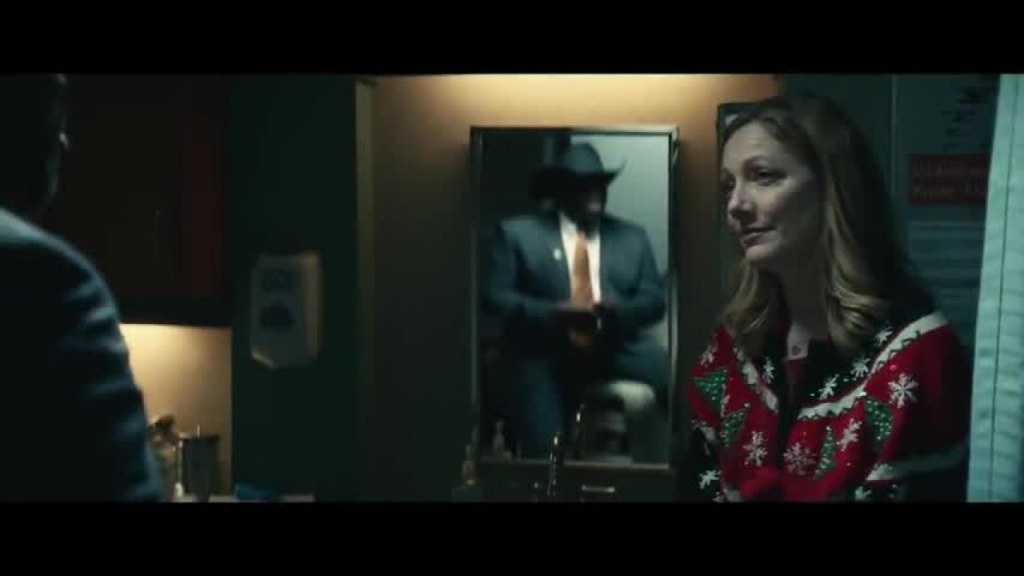
If you notice the people at the bar are all in costume except for Tommy, Marion, Lyndsey and Lonnie (all Gen Xers). Why? Because these adult survivors are in costume as adults, as capable citizens. The harangues of their boomer parents combined with the emerging relevance of millennials and GenZ-ers has rendered them irrelevant (Lonnie laughing at a ventriloquist, a puppet, is one of the most disturbing images of this film because like most of Gen X, these adults are just puppets, automatons of their parents, too impotent to save their own Gen Z children or even themselves). They are nothing more than lambs to Michael’s slaughter and boy do they get slaughtered. Michael eventually puts Karen out of her dutiful put-upon Gen X misery. And this added layer helps to temper the Michael that is supercharged and in this Nispelian fugue of terror in HALLOWEEN KILLS, his prey is so patently helpless and symbolic of this lost era and the generational death of Haddonfield that it really qualifies it with a greater meaning.

On another less hidden level of subtext is the mob mentality that these Xers stir up at Haddonfield Memorial Hospital. Here DGG is less underlining current events (the film was made well before January 6th) and instead criticizing a general contemporary quality – that the majority is always right and that true evil is found within the comfort of agreement. The mob mentality would again have their day towards the end of the film when Michael would be surrounded and repeatedly hit, stabbed and shot. But ultimately DGG argues that one disseneter (Michael) cannot be silenced by the evil of the crowd, no matter how loud or even justified their shouts may be. It is a powerful way for us as the audience to buy back onto Michael’s “side” – a slippery slope in its own right as Michael quickly murders all of them and then goes and murders Laurie’s Gen X daughter Karen when she lets her guard down for a minute to look out the window of the Myers house, standing where Michael stood, this is the Xer getting one final payment for trespassing across the property of her boomer predecessors.
There is nothing really to enjoy about Michael’s killing spree in this film – and yet we largely do. It is this slippery slope that DGG expertly crafts a trap that ultimately leads us as audience members into that shaky final scene with Michael staring out the window, standing over Karen Strode’s body – as dark of an ending ever seen in the HALLOWEEN franchise.
Metatextually: HALLOWEEN KILLS is an expert meat-commentary on prequels amping up the body count. This is classic slasher territory – from FRIDAY THE 13TH PART 2 to NIGHTMARE ON ELM STREET 2 to even CHILD’S PLAY 2 – the second slasher HAS to up the body count. And again, as I have already said, DGG WAY UPS it, in his own words, he “supercharges” Michael. He even makes us root for Michael in the same way that by the second or third install ment of a horror franchise we are rooting for Freddy or Jason. But unlike those films, DGG makes us feel horrible for doing it. He also ups it to the point that it is almost funny – and at times it actually is. I want to talk about two scenes, first the scene between the gravekeeper and her husband and then the sad story of the Johns aka Big John and Little John. And at times this one ups it to the point that it is almost a parody – I mean it is borderline DEATH PROOF or even PLANET TERROR at some point.
The story of the Sonia the caretaker (seen briefly at the graveyard in HALLOWEEN 2018) and her husband is somewhat comical because they are using a drone. Now I am not going to say that drones are inherently funny but they are when you juxtapose them in a house in the middle of a slasher. Now also the caretaker’s husband’s reaction to seeing Michael in their bathroom is also funny. But it quickly becomes not funny and I think that is DGG’s point with so much in this movie. He wants to lull us into complicity, into agreement and then pull the rug out from under us. Michael’s murder of the caretaker’s husband and that he keeps her alive to watch may be one of the most brutal in ALL movies ever created in this franchise.
Next come the Johns aka Big John and Little John. The two are almost a “breather” or even a short film within the larger framework of HALLOWEEN KILLS. They are DGG’s version of “Abbot and Costello meet Frankenstein”. They are inherently fun and funny characters. They listen to goofy music, they watch goofy movies. And they are two characters (maybe the only characters) that would be more at home in EASTBOUND AND DOWN or THE RIGHTEOUS GEMSTONES. When they are first scared by a trio of older kids trick or treating (who also later become fodder for Michael’s wrath), we immediately want to root for them. But like so many characters in this film they make a mistake of co-opting Michael’s evil for their own which immediately gives you a one way ticket to the butcher knife zone.
I want to talk about two more metatexutal notes that are pretty straightforward but ultimately make HALLOWEEN KILLS really feel like a HALLOWEEN film. First it has the best mask in the entire franchise. The half dark/half light Michael mask is a perfect metaphor for the avenger that Micahel almost is or that we want him to be at times in this film. The little touches: the black lips, the discolored rubber, the singed hair, give this William Shatner mask, a truly otherworldly feel.
The last note is John Carpenter’s score. This is my favorite Carpenter score (and use of a Carpenter score) since HALLOWEEN 1978. It is even better than the work he did for THE THING. The guitar work during the Hospital riot, the truly supercharged reworking of the theme over the end credits. It is all perfection. Bravo!
HALLOWEEN ENDS – A weirder than weird FIRE WALK down a LOST HIGHWAY with a MULHOLLAND DRIVE Michael Myers at your side…

How do you follow up HALLOWEEN KILLS? That is the question that I had for the better part of the last 12 months. Sure there’s the obvious – a final showdown/cat and mouse thriller between Laurie and Michael. Maybe she’s not in Haddonfield anymore, maybe she’s living in a high rise in Chicago, maybe she’s an ambulance driver now (hopefully you understood those references). But none of those were going to be good enough to satisfy a narratively demanding guy like DGG. If HALLOWEEN KILLS was everything I wanted in a HALLOWEEN movie, then HALLOWEEN ENDS was everything that I wanted from a HALLOWEEN movie but didn’t know I wanted. Moreover, HALLOWEEN 2018 was really a first act for the greatest slasher of all time HALLOWEEN KILLS, and in turn HALLOWEEN KILLS becomes a first act for HALLOWEEN ENDS – the Lynchian roller coaster of the body swaps of LOST HIGHWAY, the surrealistic tone and visual style of MULHOLLAND DRIVE and the archetypes of TWIN PEAKS.
So DGG still manages to deliver this story in a way that is both germain to those influences but also to the heritage of horror films by crafting an homage to the replacement killer sequels made popular in films like NIGHTMARE ON ELM STREET 2 and FRIDAY THE 13TH V: A NEW BEGINNING and of course HALLOWEEN 5. This is the genre trope where the serial killer has been roundly dispatched in the previous film, beyond a doubt, even for these films, that a new person picks up their mask, their costume, their powers (where applicable) and begin a killing spree of their own.
Now this replacement killer angle is very unexpected because at the end of HALLOWEEN KILLS, Michael is definitely alive and that plot of one final round of Laurie vs Michael for all the marbles is RIGHT THERE. But because it is “right there” and would ultimately be something so predictable. So instead he skips ahead an installment and gives us the story of Corey Cunningham, a happy-go-lucky soon to be college student and part-time babysitter who accidentally kills a child that he is babysitting on Halloween in 2019. He is racked with guilt and the town is racked with hatred for Michael that manifests in a hatred to Corey. Because you see, Michael has disappeared. He has not been seen since the night he killed Karen Strode, way back in 2018.
If HALLOWEEN 2018 was the general audience crowd pleaser, and HALLOWEEN KILLS was one for the horror hardos, then HALLOWEEN ENDS is the proverbial “one for me” film – as in when a director says they are going to do “one for the studio” and then “one for me”. I can imagine that after the massive success of HALLOWEEN 2018 and relative pandemic-success of HALLOWEEN KILLS, Universal and Blumhouse were going to let DGG do almost anything in ENDS – as long as he gave us the final Michael and Laurie confrontation and had Laurie win.
But DGG creates a film so far off the expected track that when that confrontation and win ultimately come, I was honestly thinking “did Michael want to die?” Heck I can’t even write about this film in the Textually/Subtextually/Metatextually sub-categories that I’ve been using for HALLOWEEN 2018 and HALLOWEEN KILLS. There is plenty of metatexutal evidence as well, pointing to what a surrealistic haunted house the entire town of Haddonfield has become. Yes, the Myers house has been demolished. But does it matter when in our opening shot we see a house that from the outside looks like it is two stories and inside it looks like four? This two story/four story house is the ultimate metaphor for there being so much more going on in Haddonfield than whatever appears on the outside (and hey lets face it, even the outside is pretty ugly).
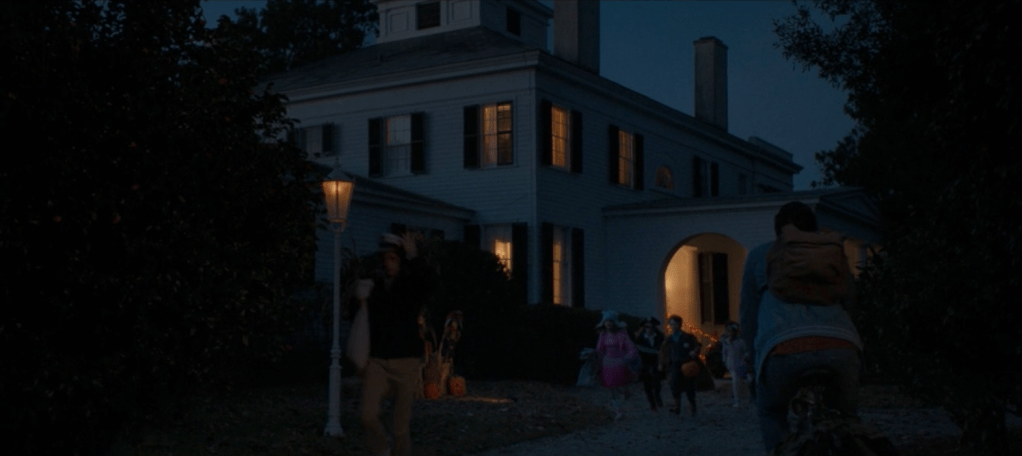
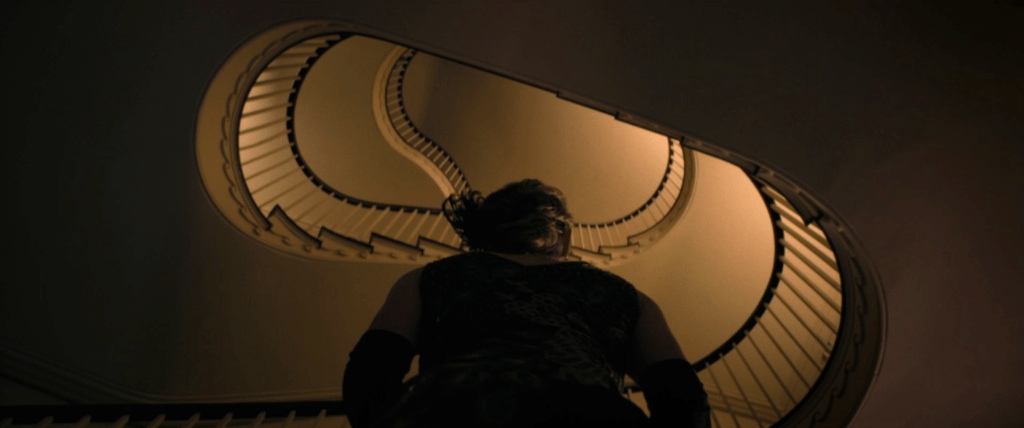
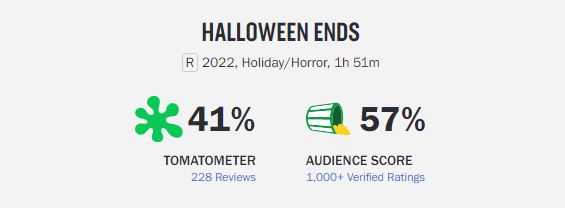
DGG puts the exact ending that the studio and the general audience wanted (Laurie vs. Michael) but still manages to subvert it! Because of that, a majority of the general audience was anywhere from frustrated to massively pissed about this film. It received and almost 80% second week drop-off at the box office and a C+ Cinema Score (almost unfathomable bad). Because DGG gives us a film where a new character – not even someone in HALLOWEEN 2018 or KILLS takes center stage. Was this a mistake – or a stroke of genius?
Meet Corey Cunningham. Corey is an older teen earning money through babysitting to save up for State College. Like so many in Haddonfield he was indirectly affected by Michael Myers but ultimately becomes directly affected by him. He is a faceless person, a meaningless statistic. Until he is not. Much like the way Balthazar Getty in LOST HIGHWAY (a film which HALLOWEEN ENDS takes many visual and thematic cues from) is the reincarnation of Bill Pullman’s character, could Corey be looked at as the reincarnation of Michael’s victims from HALLOWEEN 2018 and KILLS, now returned only to align with Michael, to stalk Laurie and to date Laurie’s daughter? Maybe it is a stretch, but one thing is undeniable, that the labyrinthian, surrealistic journey of Corey is far deeper and more complicated than whatever we saw in FRIDAY V or even NIGHTMARE 2. Corey goes from that “good kid” earning babysitting money to pay for college to a serial killer in training. After a near-death encounter with Michael Myers (who pulls him into one of the most brilliantly art-directed sewers this side of David Lynch), he returns home to find his wounds have miraculously healed – much like Tobey Maguire in SPIDER-MAN (2002). And a few scenes later an observant viewer would notice that he is now wearing his Michael Myers coveralls at all times, even though they are sometimes shielded by a leather jacket straight out of wardrobe from TWIN PEAKS. When Corey arrives to babysit in that fateful prologue, he wears a jacket that says “HOLIDAY” in place of a name, surely a nod to Corey’s journey from this generic “Holiday” to becoming Michael Myers, the embodiment of HALLOWEEN. And the conversations between Corey and Alyson in their courtship feel so overly melodramatic, not far off from something that James and Laura Palmer might have exchanged in FIRE WALK WITH ME.

Later on in the film, Corey wakes up in the old two-story/four-story house and finds a vision of Laurie Strode watching over him. When she harangues him to stop dating her daughter he yells, “but YOU INVITED ME.” It is a creepy scene that is likely taking place entirely in Corey’s head (viewers should note that Laurie has a paper plane in her hand – a signal to the fateful night of the accidental murder at the house).
On one level, subtextually, DGG is trying to pose the question that we all can be Michael Myers. Heck, we can all be WORSE than Michael Myers. And most frighteningly – we could all CREATE the next Michael Myers. The vagrant guarding Michael’s subway lair under the highway confronts Corey claiming that he IS MICHAEL MYERS. And while you could write it off as an old drunk trying to scare Corey, it seems more like this man is Michael’s current avatar and ultimately Corey has to – and does – kill him, taking that doppelganger power by force.

And the potential that anyone could take that turn with a few wrong choices, a few unfortunate events, that realization is scarier than any final confrontation between him and Laurie. In a world full of guilt, like Haddonfield, people who are presumed guilty will fulfill that destiny. Corey’s journey becomes the ultimate descent into evil because in Haddonfield, evil has become the only path.
Speaking of Haddonfield, arguably the true antagonist of ENDS – and maybe DGG’s entire trilogy, on another level, DGG is displaying a town that is rotting from the inside out. Haddonfield has changed so much from 2018 – let alone 1978. One of the most effective things about the prologue in KILLS was how different Haddonfield looked in 1978 – not just in terms of lighting, but in terms of beauty and spirit. In interviews DGG has specifically said that HALLOWEEN ENDS takes place in a post-pandemic world. And though he does not specifically mention “pandemic” or “COVID-19” in the film, and the only masks you see are the grody William Shatner mask, it is a world unmistakably shaken by a horrible event that has come out on the other side more horrible for it. It is a world that is not that dissimilar to our own. The mood, the way people now stare with more meanness, that people are more likely to fight than bond, is all very indicative of this post-pandemic world we now live in. Laurie even calls Michael an “infection” at one point, surely a line that DGG is using quite purposefully.

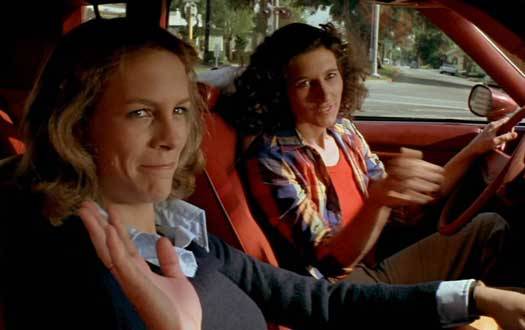
So what about the real Michael Myers? In a world where everyone is evil, is it really even fun to be The Shape? And throughout HALLOWEEN ENDS, Michael seems lost, confused, and some might even say remorseful. When he shows up at Laurie’s house, he watches her watching Corey and Alyson. She is defeated. And Michael, seeing this, does not confront her – even though it would be a great time do so. Instead he walks away, seemingly in, dare I say remorse? Michael is in a state of seeming defeat, he is not just living in the sewers but inside of the sewer walls. He is UNDER underground. This is both symbolic of the poison that has invaded all of Haddonfield and of Michael realizing that perhaps his best days and best kills are behind him – something that might be also what the artists who made the film might be thinking. How does one end things when the series has potentially climaxed already (with HALLOWEEN KILLS)? I suppose it is all about subversion. Michael eventually returns to confront Laurie at a much more inopportune time – after she has already fought Corey, who is still alive and with her granddaughter lurking. And when he does, he does not go down without a fight but after a second and third viewing I think it is at least arguable that he is pulling his punches. He wants rest, and he wants Laurie to be the one to give it to him. And maybe this is kind of a bullshit read of the film. Evil doesn’t care. When did Michael start caring? Maybe its less of caring about the world he now lives in and instead fearing it. In three films Michael went from the straw that stirs the drink to the drink being stirred by Haddonfield. Death is his way out. Who knows? It all is DGG creating a world in service of undermining EVERYTHING about a final confrontation – a confrontation that was supposed to be an execution could be read as a euthanization. Perhaps a fitting end for the trilogy. In the end, Laurie packs her house up, in all likelihood finally ready to leave Haddonfield or at least go on a trip to see the cherry blossoms with Frank. Still two disconcerting small touches are ladled into the final seconds of the film courtesy of DGG and McBride’s encyclopedic knowledge of the franchise. The first is more of a “Where’s Waldo” moment, as the keen eyed audience member would see that Laurie has kept Michael’s mask and it now lays on her coffee table. Never a good sign to have that mask – though perhaps a good sign for a sequel. The second is the needle-drop of Blue Oyster Cult’s classic “Don’t Fear The Reaper” over the final shots and closing credits. While it may sound empowering on an uninitiated listen, one must remember that this was the song that Laurie and Annie once played in their carefree days as they drove around Haddonfield smoking and laughing – just hours before Michael Myers would go on his rampage. Are things ending or just beginning… again?
Thesis
Ultimately, DGG’s trilogy is more about Haddonfield than it is about Michael Myers or even Laurie Strode. And maybe that’s why some people love it and some people hate “The Haddonfield Trilogy”. We see Michael Myers go from a supercharged killer to a man out of place, overshadowed by the evil which he began. We see Laurie as an avatar for Haddonfield go on a journey from assured if delusional preparedness to a rational acceptance of her fate and place in this world. And maybe that is all any of us can hope for – acceptance of our place in this world. Not accepting that is what got Karen Strode killed way back in HALLOWEEN KILLS. And maybe that’s what DGG is ultimately trying to say: the only way to keep true evil out, is by admitting that it is here and that we are no match for it – and working from there. It is a dark fate, but one with ultimately a small ray of hope at the end.
 No Scoops Club